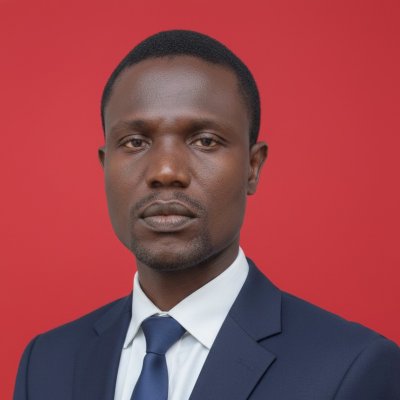
My Journey as an Educator: The Story of Tope Michael Ologunada
From an unexpected course choice to discovering my purpose, my journey into education taught me the value of professional teacher preparation and the urgent need to rethink how Nigeria recruits, values, and supports its teachers.
· 21 min read

Introduction
This is the story of Tope Michael Ologunada, whose journey into education began with an unexpected turn during his university application. What started as a dream to study Mathematics eventually led him to Computer Science Education and a deeper understanding of the teaching profession. Through personal experiences, challenges, and reflection, he explores the value of professional teacher preparation and the urgent need to reform Nigeria’s education system.
1. The Dream of Studying Mathematics
My name is Tope Michael Ologunada, and my journey as an educator began in a way I could never have predicted.
As a young man trying to find my direction in life, I had a strong interest in Mathematics. During my secondary school years, Mathematics and Geography were among the subjects I found relatively easy to understand and pass. I had confidence in my mathematical ability and believed that studying Mathematics at the university was the natural next step for me.
If I had the opportunity to attend a tertiary institution, Mathematics was the course I wanted to study.
However, my plans changed in 2011 when my brother advised me to consider Computer Science instead. I accepted his advice and began preparing for the Joint Admissions and Matriculation Board (JAMB) examination.
At the time, my first-choice university was the Federal University of Technology, Akure (FUTA), while Adekunle Ajasin University, Akungba-Akoko, was my second choice. I intended to study Statistics at FUTA and Computer Science at Adekunle Ajasin University.
I had a plan, and I believed I knew where I was going.
Little did I know that an unexpected turn would introduce me to a profession that would eventually shape my identity and outlook on life.
2. The JAMB Registration That Changed My Direction
In 2011, during the New Year festive period, I travelled to Badagry, Lagos, to celebrate with my uncle. He was the one who paid my JAMB registration fee. I completed my registration at a cybercafé in Badagry and later returned to my brother's residence in Command, Ipaja, Lagos, where I was staying.
After the registration, I returned to the cybercafé to collect my reprinted examination slip, which contained my examination details and schedule. I collected it without carefully checking every detail.
At that moment, I had no reason to suspect that anything was wrong.
When I returned to my brother's house in January, I continued preparing for the examination. Two days before the examination, as I was getting ready to travel back to Badagry, my brother asked to see my JAMB slip.
He examined it and discovered something unexpected.
The course I had chosen for my second-choice university was not Computer Science in the Faculty of Science. Instead, it was Computer Science Education in the Faculty of Education at Adekunle Ajasin University.
My brother was angry. He questioned me about why I had selected Computer Science Education when I had intended to study Computer Science.
I was confused, too. "Education?" I wondered. "How did Education enter the picture?"
I collected the slip and looked at it myself. There it was, clearly stated: Computer Science Education, Faculty of Education. At the time, I did not fully understand what the course entailed. I had not planned to become a teacher, and I had never seriously considered a career in education.
My brother was convinced that I needed to change the course. He insisted that I should apply to study Computer Science in the Faculty of Science instead. Eventually, he advised me to write the examination first and decide on the next step afterward.
I travelled to Badagry and sat for the JAMB examination.
When the result was released, I scored 231.
My brother was delighted with my performance. He again encouraged me to change the course to Computer Science. But something had begun to change in my thinking.
I explained that I had completed the registration at the cybercafé, and I could not explain how Computer Science Education had appeared on the slip. I had not deliberately chosen it.
Then I suggested something that surprised even me.
Perhaps God wanted me to study Education.
I proposed that we leave the course as it was and see what happened.
Looking back, I cannot say with certainty why the course appeared on my registration slip. What I can say is that the experience introduced me to a field I might never have considered otherwise.
Instead of rejecting the course outright, I began to investigate what Computer Science Education was about. I wanted to understand what it meant to combine Computer Science with the study of teaching and learning.
Gradually, my interest grew. I began to imagine myself in a classroom, helping students understand difficult concepts, developing their abilities, and contributing to their future.
The possibility of becoming a teacher no longer seemed strange.
My journey into education had begun.
3. Gaining Admission: A New Beginning
My name eventually appeared in the second batch of the admission list for Adekunle Ajasin University, Akungba-Akoko. I had gained admission to study Computer Science Education.
In 2012, I resumed as a 100-level student.
I arrived at the university with hope and a growing determination to develop myself. I wanted to acquire knowledge, build my abilities, and become someone who could make a meaningful difference in the lives of others.
Although I had not initially planned to study Education, I was becoming increasingly convinced that teaching could be a worthwhile profession.
I began to see the classroom as more than a place where teachers delivered lessons and students wrote examinations. It was a place where young people could discover their abilities, develop confidence, and acquire the knowledge and skills they needed to navigate life.
However, my enthusiasm soon encountered a difficult reality.
I discovered that some people did not share my growing appreciation for teacher education. Instead, they regarded Education as an inferior discipline.
That attitude would become one of the defining challenges of my undergraduate years.
4. "EDU": The Label That Followed Me
During my time at the university, I experienced humiliation from some fellow students and lecturers in the sciences. They treated students in Education as though we were less capable than those studying other disciplines.
Some of my hostel mates, who were studying science-related courses, gave me the nickname "EDU."
Whenever they saw me, they called me "EDU," often to remind me that I was studying Education.
The message behind the name was clear: they believed Education was a course for students who could not gain admission into more prestigious programmes or who lacked the intellectual ability to study other disciplines.
In their eyes, Education students were academically inferior. They associated the programme with laziness, low intellectual ability, and limited career prospects.
Their comments suggested that studying Education meant settling for less.
Some of these students spoke confidently about their future careers. They imagined themselves working in industries, hospitals, companies, and other professional settings where they would practise their disciplines and earn good salaries.
Teaching, on the other hand, was not a career they wanted to pursue. They believed teachers earned little and received little recognition for their work.
I was young, and hearing such comments was not always easy. It was painful to see a profession responsible for preparing people for virtually every other profession treated with such little regard.
Yet, rather than abandoning my interest, I became more determined to understand the value of what I was studying.
I wanted to know why a profession so central to the development of individuals and society could be dismissed so casually.
I also began to question the assumption that subject knowledge alone was enough to make someone an effective teacher.
Those questions have remained with me throughout my journey.
5. The Contradiction: Those Who Rejected Teaching Eventually Entered the Classroom
One of the most striking things I observed was the contradiction between what some of my fellow students said about teaching and what happened after graduation.
Some of those who had ridiculed Education students and insisted they would never become teachers eventually found themselves working in classrooms.
I often wondered what had changed.
Why had teaching suddenly become an option for people who once regarded it as an undesirable profession? Why were graduates who had deliberately studied Education sometimes struggling to secure teaching appointments while people from other academic backgrounds were being recruited into the same classrooms?
I understood that employment opportunities, personal circumstances, and career interests could change. I also recognised that graduates from different disciplines could make valuable contributions to education.
My concern, however, was the apparent contradiction between the low regard in which teacher education was held and the willingness to enter the classroom without necessarily acquiring the professional preparation that effective teaching demands.
In some cases, subject qualifications appeared to receive more attention than professional teacher preparation.
A person might possess an excellent degree in Mathematics, Physics, Biology, Chemistry, or Computer Science and be considered suitable for teaching simply because of that academic qualification.
Meanwhile, graduates who had spent years studying educational psychology, teaching methods, curriculum development, classroom management, assessment, and other aspects of professional teacher preparation could remain unemployed.
This raised a fundamental question: Are we recruiting people simply because they know a subject, or are we recruiting professionals who know how to teach it?
The distinction matters.
Education graduates do not merely study the subjects they intend to teach. They also study how learners acquire knowledge, why students struggle, how to plan instruction, how to assess learning, and how to adapt teaching to different abilities and needs.
Their preparation is directed towards the demands of the classroom.
When this professional preparation is overlooked, we risk sending the wrong message to prospective teachers and weakening the value of the training that professional educators receive.
The problem is not that people from other disciplines should be prevented from teaching. Rather, it is that everyone entrusted with teaching should meet appropriate professional standards.
6. Knowing a Subject Is Not the Same as Knowing How to Teach It
The claim that anyone can teach because they understand a subject is one of the assumptions I have come to question most strongly.
Consider Mathematics, the subject I once dreamed of studying at the university.
A person may be exceptionally good at Mathematics. They may solve complex equations, understand advanced mathematical concepts, and perform brilliantly in examinations.
But can that person explain a basic mathematical concept to a learner who is struggling?
Can they identify the source of the learner's difficulty? Can they select an appropriate teaching method, develop suitable learning activities, assess understanding, and provide feedback that helps the learner improve?
These are different demands.
Knowing Mathematics is a subject competence. Teaching Mathematics effectively requires subject competence alongside pedagogical knowledge and practical teaching skills.
The same principle applies to Computer Science and every other school subject.
A professional teacher must understand both the content and the process of helping learners acquire it. This involves understanding learners, setting learning objectives, selecting instructional strategies, managing classrooms, assessing progress, and responding to individual differences.
Teacher education provides a structured foundation for developing these competencies.
Of course, completing an Education degree does not automatically make someone an excellent teacher. Professional preparation must be supported by sound teaching practice, continued learning, ethical conduct, and a willingness to improve.
Similarly, a graduate from another discipline can become an effective teacher through appropriate professional training and experience.
The point is not to establish superiority between graduates of different programmes. It is to recognise that the work of teaching requires specific professional competencies that should be properly assessed and developed.
We would not normally assume that academic knowledge alone qualifies someone to perform every specialised task in medicine, engineering, law, or other professional fields. It is therefore reasonable to ask why teaching is sometimes treated differently.
If we want learners to receive quality instruction, we must take the professional preparation of their teachers seriously.
7. My Growing Conviction About Teacher Education
My undergraduate experience helped me appreciate the importance of the profession I was preparing to enter.
I began to understand that teaching is not simply about standing before a class and explaining a topic. It involves careful planning, sound judgement, patience, assessment, communication, and the ability to respond to the different ways people learn.
A teacher's influence can extend far beyond a lesson or an examination result. Teachers help learners develop the knowledge, skills, attitudes, and confidence they need to participate meaningfully in society.
They also contribute to the preparation of future scientists, doctors, engineers, entrepreneurs, researchers, and professionals across every sector.
This responsibility demands competence.
It also demands respect.
The fact that teaching is sometimes poorly rewarded or regarded as less prestigious does not diminish its importance. Rather, it raises questions about how society values the people responsible for educating its citizens.
We cannot continue to demand excellent learning outcomes while treating teacher preparation as a secondary concern.
We cannot insist on educational improvement while ignoring the professional knowledge teachers need to make that improvement possible.
And we cannot expect talented young people to embrace teaching if the profession is consistently portrayed as a last resort.
My journey has convinced me that changing attitudes towards teachers requires more than public praise. It requires practical changes in recruitment, professional standards, working conditions, and opportunities for career development.
That brings me to the wider reforms I believe Nigeria needs.
8. Nigeria Needs Reform in Teacher Recruitment and Professional Recognition
The challenges I observed as an undergraduate are connected to a broader question about the quality of education in Nigeria.
How do we ensure that every classroom has a competent teacher? How do we recognise the value of professional teacher preparation? And how do we make sure that people who have trained specifically for the profession are not overlooked during recruitment?
These questions require serious attention from government, teacher education institutions, school administrators, and the professional bodies responsible for regulating teaching.
Reform must move beyond statements about the importance of education. It must translate into policies and practices that strengthen the teaching profession.
a. Government must prioritise professionally prepared teachers
Federal and state governments, alongside the relevant education authorities, should establish and consistently implement transparent teacher recruitment policies that give appropriate recognition to professional teacher qualifications and demonstrated teaching competence.
Graduates of accredited teacher education programmes should receive due consideration when recruitment decisions are made, particularly for roles aligned with their subject specialisations.
This does not mean that a person who studied Education should automatically be employed regardless of competence. Every candidate should meet the relevant standards.
However, professional teacher preparation should count for something meaningful. It should not be treated as an unnecessary qualification or ignored simply because another applicant holds a degree in the subject being taught.
Where graduates from other disciplines are needed to address teacher shortages, they should be required to obtain appropriate pedagogical preparation and meet the applicable professional registration and licensing requirements.
The goal should be to ensure that every person entering the classroom is adequately prepared for the responsibilities of teaching.
b. Professional bodies must defend standards and strengthen accountability
Professional bodies, particularly the Teachers Registration Council of Nigeria (TRCN), have an important role to play in advancing professional standards.
Their responsibility should include strengthening public understanding of teaching as a profession, promoting compliance with applicable registration and licensing requirements, supporting continuing professional development, and working with relevant authorities to ensure that professional standards are upheld.
Professional regulation should be more than a formality. It should help assure parents, learners, employers, and the wider public that teachers possess the required knowledge, skills, and professional competence.
At the same time, professional bodies should advocate for fair recruitment practices and improved opportunities for qualified teachers.
A profession cannot command public confidence if its standards are inconsistently applied or if the qualifications required to enter it are routinely disregarded.
c. Education graduates must be given fair opportunities
Graduates of Education programmes invest time and effort in preparing for a demanding profession. Their training should be recognised in recruitment, career progression, and professional development.
Government and school employers should make better use of the pool of qualified teachers available to them, matching candidates to vacancies according to their subject specialisations, professional preparation, and demonstrated competence.
Where qualified graduates remain unemployed while schools struggle with shortages of competent teachers, recruitment systems need to be examined.
This is not simply an employment issue. It is also an educational quality issue.
When trained teachers are overlooked, the country risks wasting valuable professional capacity. When schools employ people without adequately assessing their readiness to teach, learners may be left without the support they need.
A more effective system would connect teacher preparation, recruitment, deployment, induction, and continuing professional development.
d. Teacher education must be improved, not merely defended
Prioritising Education graduates should not mean protecting existing systems from scrutiny. Teacher education programmes themselves must maintain high standards and respond to the changing needs of schools.
Universities and colleges of education should ensure that their programmes combine strong subject knowledge with effective pedagogy, meaningful teaching practice, educational technology, inclusive teaching strategies, and appropriate assessment methods.
Student teachers need opportunities to practise what they learn under the guidance of experienced, competent mentors.
They should graduate with more than a certificate. They should possess the practical skills and professional judgement needed to support learning in real classrooms.
Government and professional bodies should also support ongoing training so that teachers can adapt to changes in curriculum, technology, teaching methods, and learners' needs.
The aim must be to build a profession in which qualifications are meaningful because they are supported by competence.
e. Government must improve teachers' working conditions
Recruitment reform alone will not solve the challenges facing the teaching profession.
Teachers also need reasonable working conditions, access to teaching resources, opportunities for advancement, fair remuneration, and a professional environment in which their contributions are valued.
A country that wants to attract and retain capable teachers must demonstrate that teaching offers a viable and respected career.
Poor working conditions can discourage talented people from entering the profession and push experienced teachers towards other opportunities.
Government must therefore treat teacher welfare as part of its broader commitment to educational development.
Public respect for teachers matters, but it must be accompanied by practical support.
9. Using the Right Tool for the Specific Task
There is a principle from technology that I believe applies directly to education: the right tool must be used for the task it is designed to perform.
A computer may be capable of performing many operations, but different tasks require appropriate software, configurations, and expertise. We do not assume that every tool is equally suitable for every job simply because it can perform some related function.
The same reasoning applies to professional work.
In education, subject knowledge is essential, but it is only one part of the teacher's work. Pedagogical knowledge, classroom experience, assessment skills, and an understanding of learners are also necessary.
A person who knows a subject may have the potential to become an excellent teacher. But that potential should be developed and assessed through appropriate professional preparation rather than assumed.
We must be careful not to confuse the ability to perform a task occasionally with the professional competence required to perform it consistently and effectively.
A person may explain a concept to a friend and help them understand it. That does not necessarily mean the person is prepared to plan lessons for a diverse class, identify learning difficulties, manage classroom behaviour, assess progress fairly, and support learners with different educational needs.
Teaching is a specialised task. It deserves the appropriate preparation, tools, and professional standards.
This principle should guide how we recruit teachers, prepare them for the classroom, evaluate their work, and support their continued development.
When we use the right tools for the right tasks, we improve the likelihood of achieving the intended results. In education, one of the most important investments we can make is ensuring that the people entrusted with teaching are professionally prepared for that responsibility.
10. A Call to Action: Let Us Reform the System
My journey from aspiring Mathematics student to Computer Science Education graduate has shaped my understanding of what it means to become an educator.
I did not begin with a clear intention to teach. My entry into Education followed an unexpected turn during my JAMB registration. But that experience opened a path through which I developed an appreciation for the teaching profession and the responsibilities it carries.
The ridicule I experienced as an undergraduate also exposed a troubling perception: that Education is inferior to other disciplines and that anyone who understands a subject can teach it.
I believe Nigeria must move beyond that mindset.
Our government must prioritise quality teacher preparation. Our professional bodies must uphold and enforce appropriate standards. Our schools must recruit based on relevant qualifications and demonstrated competence. And our society must recognise teaching as a profession that requires specialised knowledge and skills.
Education graduates should be given fair consideration for teaching positions, particularly where their training aligns with the needs of the school. Their qualifications should be recognised, their competencies assessed, and their potential developed.
Where individuals from other academic backgrounds enter teaching, they should receive the professional preparation necessary to teach effectively and satisfy the applicable standards.
This approach is not about creating unnecessary barriers or declaring one group of graduates superior to another. It is about protecting the quality of teaching and ensuring that learners receive the education they deserve.
The government must translate this commitment into clear recruitment policies, adequate funding, better working conditions, and effective implementation. Professional bodies must ensure that registration, licensing, and continuing development contribute meaningfully to the quality of classroom practice. Teacher education institutions must prepare graduates who can meet the demands of contemporary education.
These responsibilities are connected. None can deliver lasting improvement in isolation.
Nigeria cannot build a strong education system by treating teachers as interchangeable individuals whose subject certificates alone determine their suitability for the classroom.
We need a system that recognises the difference between knowing a subject and knowing how to teach it. We need to value professional preparation, support competent teachers, and ensure that recruitment decisions serve the interests of learners rather than perpetuating harmful assumptions about the profession.
The classroom is too important to be treated as a place where anyone can be assigned without appropriate preparation.
The future of our children depends, in part, on the quality of the people who teach them. The future of our nation depends, in part, on the knowledge, skills, and values those children acquire.
If we are serious about educational reform, we must begin by taking the teaching profession seriously.
Conclusion: My Journey Continues
When I reflect on my journey, I remember the young man who wanted to study Mathematics, the advice that redirected me towards Computer Science, the unexpected course on my JAMB slip, and the admission that began my formal preparation as an educator.
I remember the nickname "EDU" and the assumptions that came with it. I remember the belief that Education was for those who could not study other courses and that anyone could teach simply because they knew a subject.
Those experiences shaped my perspective, but they did not define the limits of my ambition.
Instead, they strengthened my conviction that teaching deserves professional respect and that the people who prepare for it should not be treated as academically inferior.
My story is personal, but the questions it raises are national. How do we recruit teachers? What standards should they meet? How do we ensure that professional preparation is valued? And what reforms are needed to make teaching a respected, attractive, and sustainable career?
These questions deserve more than occasional discussion. They require deliberate action from government, professional bodies, educational institutions, employers, and society.
I believe we must prioritise professionally prepared teachers, provide fair opportunities for Education graduates, and ensure that everyone who enters the classroom possesses the appropriate professional competencies.
We must also recognise that reform requires continuous evaluation. Recruitment policies should be reviewed, professional standards should be consistently applied, and teacher education programmes should continue to improve.
My journey into education began unexpectedly, but my commitment to understanding and improving the profession has grown over time.
I may not have planned to become an educator when I first registered for JAMB in 2011, but the journey taught me something important: the work of teaching is too consequential to be left to assumptions about who can do it.
Let us stop asking only whether a person knows the subject. Let us also ask whether that person is prepared to teach it.
And let us build an education system in which government policies, professional standards, recruitment practices, and public attitudes reflect the importance of that distinction.
That is the reform I believe Nigeria needs. It is also a cause I believe is worth pursuing.

No comments yet. Start the conversation.